

Sensors & Motion Detectors
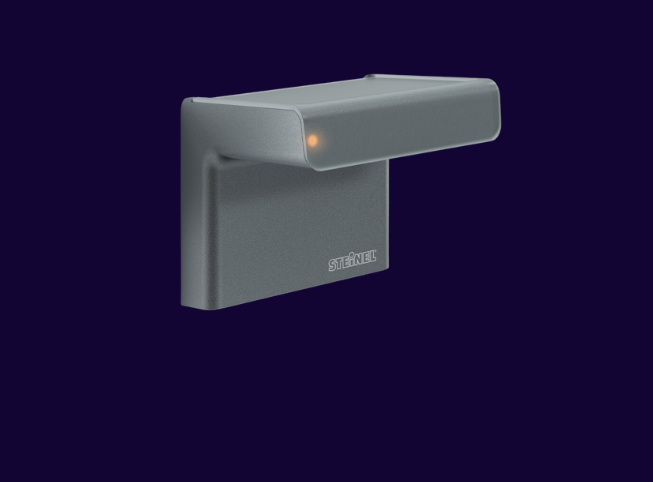
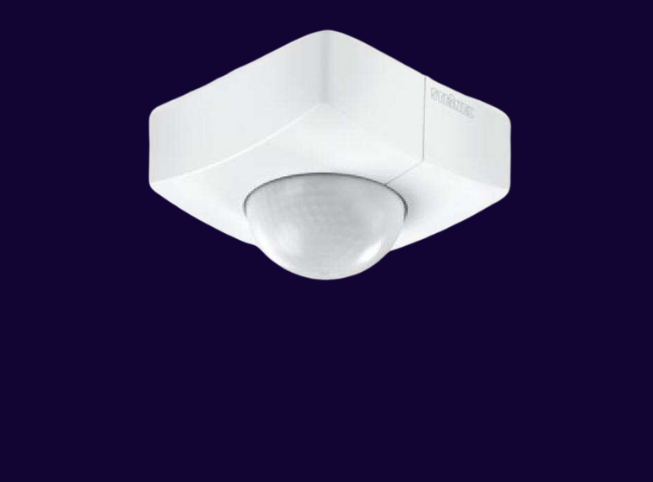
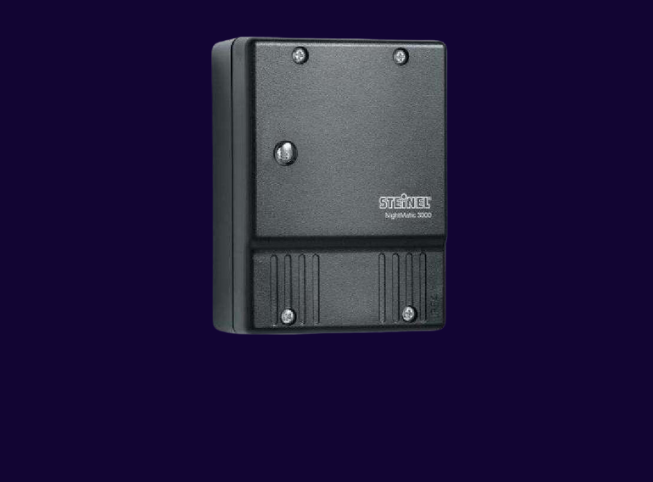
Motion detectors and sensors enable demand-based, energy-efficient lighting control – lights only come on when they are actually needed. They are ideal for both indoor and outdoor applications. The term "motion detector" is not entirely precise: these sensors do not detect movement directly, but rather changes in their environment – whether through temperature differences, electromagnetic waves or light levels. The watt24 range includes motion detectors, presence detectors, twilight switches and PIR sensors from manufacturers including Steinel, Theben, ESYLUX, Lunatone and Casambi.
Read more

- Comprehensive advice & support
- over 10,000 articles in the shop
- Shipping in 24 hours
- thousands of satisfied customers


KATHRIN BRANDT
Employee Purchasing from TroisdorfGreat advice and friendly service. I was helped immediately and competently with any questions. Gladly again.

OMAR NASER
Office Manager from Frankfurt a.M.Goods are well packaged and arrive safely, which is important to me. My mail was answered immediately.

RAINER SEIDEL
Master carpenter from WiesbadenHad to replace a lamp, but the same was no longer available. Great advice, found a suitable replacement and delivered it quickly.
What types of sensors are available?
The different sensor types work according to different principles:
PIR sensors (Passive Infrared) detect temperature changes in their detection zone caused by moving people or animals. They are well suited for indoor spaces and sheltered outdoor areas.
HF sensors (High Frequency) work with electromagnetic waves and respond to even the smallest movements, including through thin walls or glass. Ideal for corridors, stairwells and offices.
Twilight switches do not respond to movement but to ambient brightness. They ensure lights switch on only when a certain level of darkness is reached, and switch off again when it becomes bright enough.
Ultrasonic sensors use sound waves and are best suited for indoor use.
Camera motion detectors work by electronically analysing image data and are suitable for both indoor and outdoor use.
Combined sensors integrate multiple technologies to deliver more precise results and avoid false triggering.
Benefits of motion detectors and sensors
Comfort: Manual light switching is a thing of the past. Especially when a light switch is not immediately within reach – in large halls, long corridors or outdoor areas – or when your hands are simply full, a motion detector makes daily life considerably easier.
Efficiency: Motion detectors only switch on light sources when necessary. This saves energy and noticeably reduces operating costs.
Safety: Bright, automatic lighting ensures safe pathways and driveways. Light deters unwanted visitors and can be combined with sensor-triggered alarm systems – as an audible signal or as a visible light cue when movement is detected.
Motion detectors for indoor and outdoor use
Indoor motion detectors are designed for precise person detection. PIR and HF sensors cover different detection angles depending on the mounting location – 180° for wall mounting, 360° for ceiling installation. Presence detectors with a very low trigger threshold are particularly suitable for offices where seated occupants also need to be reliably detected.
Outdoor motion detectors must be weather-resistant. The minimum protection class for outdoor mounting is IP44; IP54 or IP65 is recommended for exposed locations. Adjustable sensitivity and range are important to minimise false triggering by animals or vehicles.
Matching accessories for motion detectors and sensors – such as mounting frames, ball guards or covers – are also available in the watt24 range.
The right detection range
The detection range of a sensor determines where and how reliably movements or changes are detected.
Indoor: In living spaces or corridors, the sensor should be positioned strategically so that it can detect movement at an optimal angle.
Outdoor: Sensor type and positioning should be chosen to minimise unnecessary switching caused by wind movement or small animals.
Detection angle: Motion detectors are available with different detection angles, for example 180° for wall mounting or 360° for ceiling installation.
Additional settings
Modern motion detectors offer a wide range of configuration options:
Sensitivity: Determines how much movement is needed to trigger the sensor.
Hold time: Sets how long the light remains on after the last detected movement.
Twilight threshold: Defines the ambient brightness level at which the sensor activates.
Range: Depending on the model, the detection range can be adjusted to precisely define the coverage zone.
Frequently asked questions about motion detectors
What is the difference between a motion detector and a presence detector?
A motion detector responds to larger movements and keeps the light on for an adjustable period. A presence detector is far more sensitive: it detects even minor movements like typing on a keyboard and keeps the light on as long as someone is in the room. Presence detectors are best suited for offices; motion detectors for corridors, stairwells and outdoor areas.
What types of motion detectors and sensors are available?
The most common types are PIR sensors (heat movement), HF sensors (electromagnetic waves, also through walls), twilight switches (brightness-dependent), ultrasonic sensors (sound waves, for irregular spaces), camera motion detectors (image analysis) and combined sensors integrating multiple technologies.
What IP rating does an outdoor motion detector need?
For outdoor mounting, a minimum of IP44 is required. For exposed locations such as facades, driveways or carports, IP54 or IP65 is recommended. IP65 provides full dust protection and protection against powerful water jets from any direction.
What settings do modern motion detectors offer?
Modern motion detectors can typically be configured for sensitivity, hold time, twilight threshold and detection range. Many professional models also offer protocol interfaces for DALI, KNX or Casambi.