

branch terminals
Tapping the main conductor without interruption – compact, standards-compliant, for large cross-sections
Branch connectors enable tapping from the main conductor to one or more outgoing conductors – without interrupting the main conductor. They have an asymmetric design: the main conductor (e.g. 25–150 mm²) passes through or is fed in, while the outgoing conductors (e.g. 1.5–35 mm²) are tapped off laterally. This makes branch connectors the ideal solution for power distribution in sub-distribution boards, machines, and industrial plant – wherever multiple loads need to be supplied from a single main cable. At WATT24 you'll find branch connectors for all common main conductor cross-sections.


€2.33 net €1.96
Immediately available, shipping in 1-2 business days

€2.33 net €1.96
Immediately available, shipping in 1-2 business days

€2.33 net €1.96
Immediately available, shipping in 1-2 business days

€4.37 net €3.67
Immediately available, shipping in 1-2 business days

€7.04 net €5.92
Immediately available, shipping in 1-2 business days

€2.33 net €1.96
Immediately available, shipping in 1-2 business days

€7.04 net €5.92
Immediately available, shipping in 1-2 business days

€4.78 net €4.02
Immediately available, shipping in 1-2 business days

€3.71 net €3.12
Immediately available, shipping in 1-2 business days

€4.37 net €3.67
Immediately available, shipping in 1-2 business days

€4.78 net €4.02
Immediately available, shipping in 1-2 business days

€8.51 net €7.15
Immediately available, shipping in 1-2 business days

€7.04 net €5.92
Immediately available, shipping in 1-2 business days

€11.69 net €9.82
Immediately available, shipping in 1-2 business days

€4.37 net €3.67
Immediately available, shipping in 1-2 business days


€18.27 net €15.35
Immediately available, shipping in 1-2 business days

€3.71 net €3.12
Immediately available, shipping in 1-2 business days

€8.39 net €7.05
Immediately available, shipping in 1-2 business days

€8.90 net €7.48
Immediately available, shipping in 1-2 business days

€3.71 net €3.12
Immediately available, shipping in 1-2 business days

€8.39 net €7.05
Immediately available, shipping in 1-2 business days

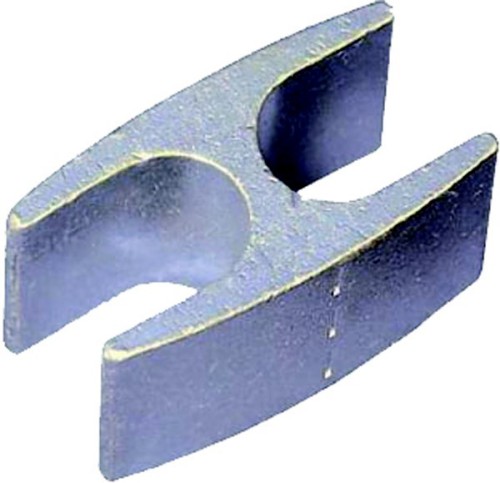
€80.28 net €67.46
Shipping in 7 day(s)


€11.00 net €9.24
Immediately available, shipping in 1-2 business days

€2.33 net €1.96
Immediately available, shipping in 1-2 business days
- Comprehensive advice & support
- over 10,000 articles in the shop
- Shipping in 24 hours
- thousands of satisfied customers


KATHRIN BRANDT
Employee Purchasing from TroisdorfGreat advice and friendly service. I was helped immediately and competently with any questions. Gladly again.

OMAR NASER
Office Manager from Frankfurt a.M.Goods are well packaged and arrive safely, which is important to me. My mail was answered immediately.

RAINER SEIDEL
Master carpenter from WiesbadenHad to replace a lamp, but the same was no longer available. Great advice, found a suitable replacement and delivered it quickly.
What is a branch connector?
A branch connector is a power distribution terminal for tapping from the main conductor to one or more outgoing conductors – without interrupting the main conductor. The design is asymmetric: the main conductor has a significantly larger cross-section than the outgoing conductors. The type code specifies the permitted cross-section combination directly – for the Pollmann HLAK 25-5/10, for example: main conductor 25 mm², outgoing conductors 5 and 10 mm².
Branch connectors are mounted without a DIN rail, directly in the installation – on cable trays, inside distribution boards, or directly at the cable. They are not a substitute for rail-mounted terminals inside control cabinets, but are designed for the main conductor level: wherever large cross-sections need to be branched without complex connection technology.
Branch connectors at a glance
| Type | Main conductor | Outgoing conductors | Typical application |
|---|---|---|---|
| Branch connector – small | 16–35 mm² | 1.5–10 mm² | Sub-distribution boards, machine outgoing circuits |
| Branch connector – medium | 35–70 mm² | 4–25 mm² | Industrial plant, building services |
| Branch connector – large | 70–150 mm² | 10–35 mm² | Main distribution, large power outgoing circuits |
Selecting the right branch connector
Three criteria are key:
- Main conductor cross-section: The cross-section of the main conductor must fall within the permitted range of the connector – if in doubt, select the next size up
- Outgoing conductor cross-sections: All outgoing conductors must also fall within the permitted cross-section range – the type code specifies the combination directly
- Number of outgoing conductors: Branch connectors are rated for a defined number of outgoing conductors – for additional outgoing circuits, use multiple connectors in parallel
Frequently asked questions about branch connectors
Splicing connectors connect multiple conductors of the same cross-section on equal terms – all poles are internally linked conductively. Branch connectors are asymmetric: a main conductor passes through or is fed in, while smaller outgoing conductors are tapped off laterally. Branch connectors are designed for power distribution; splicing connectors are for field wiring in junction boxes.
No. In most branch connectors, the main conductor passes through without interruption – the outgoing conductors are connected conductively without the main conductor needing to be cut. This is the key advantage over conventional distribution via terminal strips.
The main conductor typically has a cross-section of 16 mm² to 150 mm², the outgoing conductors from 1.5 mm² to 35 mm². The exact combination is specified in the type code – HLAK 25-5/10 means main conductor 25 mm², outgoing conductors 5 and 10 mm².
Branch connectors are used wherever multiple loads or sub-distribution boards need to be tapped from a main cable – typically in industrial plant, machine controls, sub-distribution boards, and building services.
Branch connectors for power distribution must comply with IEC 60947-7-1 (in Germany: VDE 0611-1). The key requirements relate to rated current, rated voltage, and mechanical connection strength for the relevant conductor cross-sections.
Buy branch connectors at WATT24
At WATT24 you'll find branch connectors for all common main conductor cross-sections – from compact versions for sub-distribution boards to heavy-duty connectors for large cross-sections, available for fast delivery at fair prices for electricians and commercial customers.